
Quick answer
The best way to start strength training over 40 is to learn the basics first: how to hinge, squat, lunge, push and pull with good technique, using free weights and your own bodyweight. At Move Method in Lilyfield, we build those foundations, then add skilful strength, mobility, and rehab and prehab work. It is never too late to begin.

Introduction
If you’re over 40 and thinking about strength training, you’ve probably had a few questions running through your head. Is it too late for me? Will I hurt myself? Do I have to lift really heavy? Will everyone else in the gym be 25?
I hear these questions almost every week at Move Method in Lilyfield. I’ve been coaching for around 20 years, including two and a half years as a personal trainer in London before I came home to Sydney. The answers haven’t changed much over that time.
No, it’s not too late. Yes, you can train in a way that protects your body. No, you don’t need to lift like a powerlifter. And no, our studio isn’t full of 25 year olds. Most of the people who train with us are 35 and over, and plenty are well into their 60s and 70s.
This guide explains how I’d approach strength training over 40 if you walked into our studio tomorrow. It’s written for people in Sydney’s Inner West who want to move better, feel stronger and stay capable for the long term.
Why does strength training matter more after 40?
Muscle and strength tend to drop gradually as we get older, and that drop speeds up if we stop challenging our bodies. Research on ageing keeps pointing the same way: regular strength training helps with balance, joint health, bone strength and your ability to handle everyday life.
None of that sounds exciting until you notice it in real life. It’s carrying the shopping up the stairs without thinking about it. It’s picking up a grandchild, moving a heavy box, or getting up off the floor without a groan. It’s being able to keep doing the things you enjoy, whether that’s cycling, running, gardening or travelling.
That’s what I care about most. I’m not interested in training people so they can look good for a month. I want my clients to still be moving well in 10, 20 and 30 years. In my experience, adults over 40 who build real strength are more confident in their bodies, and that confidence carries into the rest of their lives.
Is it too late to start strength training at 40, 50 or 60?
It isn’t. I’ve worked with people who started strength training in their 50s, 60s and 70s, and they’ve made real progress. A lot of them tell me they feel stronger now than they did years ago.
What matters is where you start, not how old you are. A 55 year old who has never trained needs a different starting point to a 42 year old who used to play sport. The body adapts at any age, but it adapts best when the training suits you right now.
This is why we begin every new client with a movement and goal-setting consult. We look at how you move today, any injuries or sore spots, and what you want to achieve. Then we build a plan around you. You don’t have to be fit before you walk in. Getting fitter is the whole point.
What should strength training over 40 actually look like?
There’s a lot of noise online, so let me keep this simple. This is how we do it at Move Method Lilyfield.
Step 1: Build strong foundations
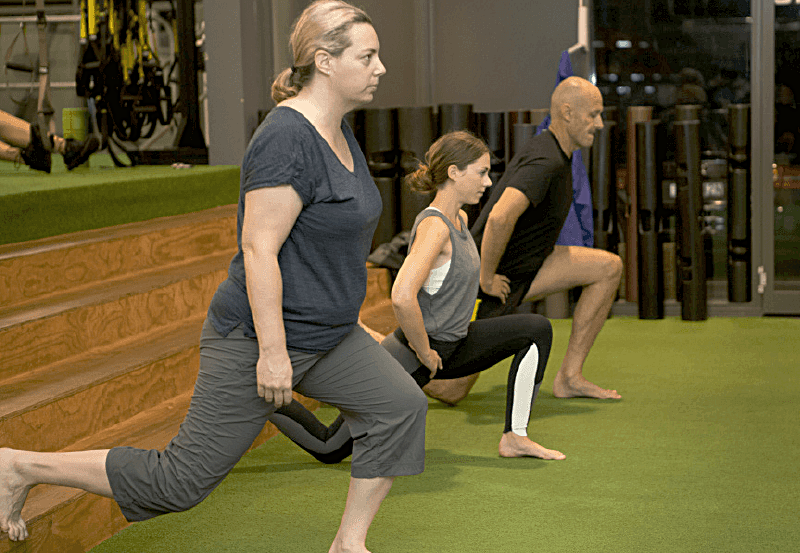
We start with the basics: how to hinge, squat and lunge correctly. These are the movements you use all day, every day. You hinge when you pick something up off the floor. You squat when you sit down and stand up. You lunge when you step up a stair or get out of a car.
If these movements are done well, your body is stronger and more protected. If they’re done badly, small problems tend to build up over time. We spend real time on technique here, and we don’t rush it.
Step 2: Build pushing and pulling strength
Next we build strength in pushing and pulling movements, such as chin-ups and dips. These work the upper body and the muscles around your shoulders and back. If you sit at a desk or look at a phone for most of the day, they matter even more.
We scale everything to your level. Nobody is expected to hang from a bar and bang out chin-ups on day one. We use progressions, so you build up to it. When someone does their first chin-up after never thinking they could, it’s one of my favourite moments as a coach.
Step 3: Add skilful strength
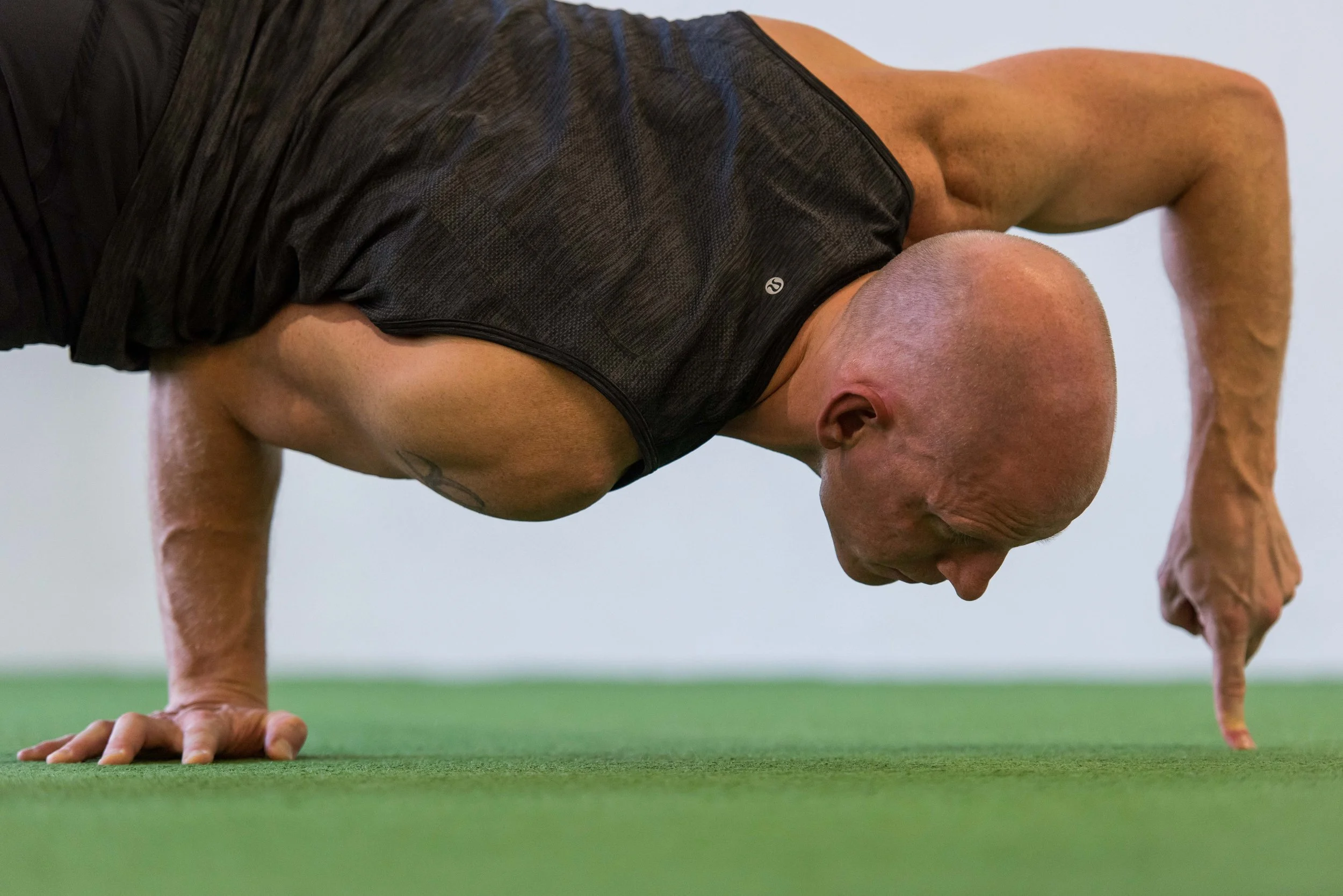
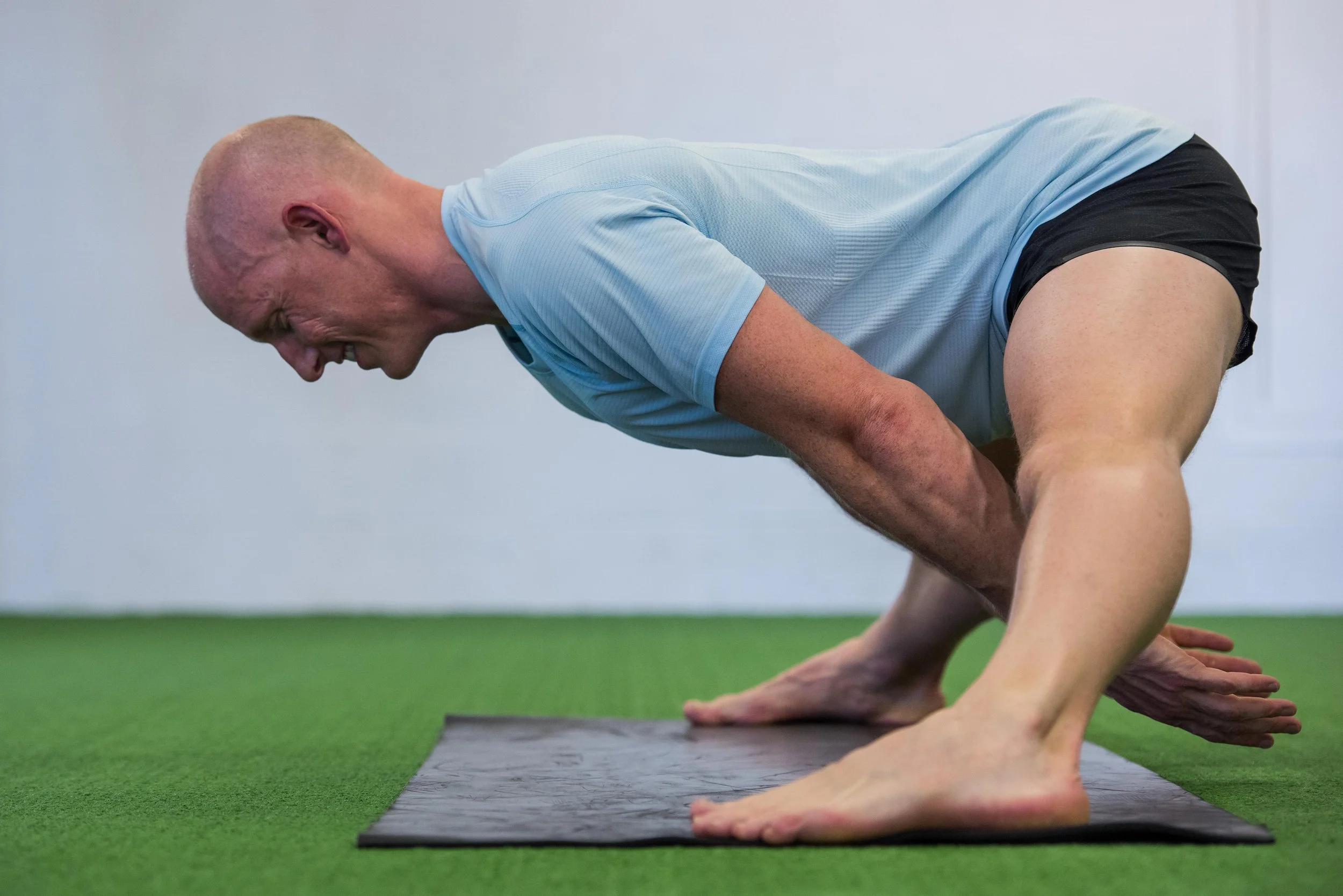
Once your foundations are in place, we move on to what we call skilful strength. This is where the training gets fun. We use Animal Flow, bodyweight exercises, gymnastics and handbalancing.
I was a competitive gymnast, so this is close to my heart. Skilful strength isn’t about doing circus tricks. It teaches your body control, coordination and awareness of where you are in space. It challenges your brain as much as your muscles, which keeps training interesting. We have a gymnastics rings and strength training page if you’d like to see more.
Rehab, prehab and mobility throughout
We build rehab, prehab and mobility drills in throughout the whole program. They aren’t an add-on at the end. The aim is to challenge the body in both strength and length, so you become strong and move well through a full range of motion.
Prehab means working on the areas that are likely to cause trouble before they do. It’s much easier to look after a shoulder or a lower back now than to fix it after it’s been hurting for months. If you’d like to try something simple at home, our daily 10 minute mobility page is a good place to start.
Do you need to lift heavy or use machines?
No. A lot of people assume strength training over 40 means getting under a heavy barbell or jumping on a row of machines. That isn’t how we work.
We don’t do any powerlifting. In our studio we only use free weights, and there are no machines. Free weights and your own bodyweight make your body work as one connected system. They teach balance and stability, and they carry over into real life more than sitting on a machine does.
That doesn’t mean the training is easy. When we load a movement, we do it carefully and progress it over time. You’ll be challenged, but you won’t be thrown in the deep end. Strength is built step by step, and good technique always comes before heavier weight.
How do you train around old injuries and sore joints?
This is one of the questions I get asked most. Almost everyone over 40 has something: a dodgy knee, a stiff lower back, a shoulder that complains, or an old injury that never quite settled.
Having an injury history doesn’t mean you can’t train. It means you need a coach who listens and who builds a program around you. During your first consult we talk through your history, and we adjust the training to suit it. Many clients find that building strength around an area helps it feel more supported.
I’ll be upfront about one thing. We aren’t physios or doctors. Our approach sits somewhere between a conventional gym and the care you might get from a physio or chiropractor. If you have an injury or medical condition, please check with your doctor or physio before you start, and tell us about it so we can work alongside them. If your back is your main concern, our Fix Your Back page explains how we approach it.
How often should you train?
Most people do well with two to three strength sessions a week. That’s enough to keep progressing without leaving you exhausted or sore all the time.
If you’re new to training, two sessions a week is a great place to begin. Consistency matters much more than intensity. I’d always rather see someone turn up twice a week for a year than train five days a week for a month and then burn out.
Recovery matters too, and it often gets forgotten. Good sleep, regular movement on your off days and a manageable schedule all help your body get stronger. If you’re busy with work and family, which most of us are, we’ll help you find a routine you can actually stick to. You can see our current sessions on the timetable.
Is it better to train in a small group or one-on-one?
Both work well, and which is better depends on you.
One-on-one personal training gives you full attention. It suits you if you’re recovering from an injury, if you’re very new to training, or if you have specific goals. Your coach can adjust every exercise as you go.
Small group training gives you coaching in a more social setting. A lot of our clients tell me the community is their favourite part. When you train alongside other people, you push each other, and it’s easier to stay motivated on the days you don’t feel like turning up. Our classes are small enough for coaches to keep a close eye on your technique.
Some clients do a mix of both. We’re happy to help you decide what fits your goals, your budget and your schedule. You can read more about our coaches and what each of them brings.
What about food, water and supplements?
Training is only part of the picture. How you live outside the studio affects how you feel and how well you recover.
We guide our clients toward a healthy lifestyle. That includes food options, recipe ideas and water intake. We also talk about supplements such as protein and creatine, and explain how some people use them.
I want to be clear that this is lifestyle guidance, not medical advice. If you have a medical condition, take medication or have specific dietary needs, please speak with your doctor or a qualified professional before changing what you eat or starting a supplement.
What happens in your first week at Move Method Lilyfield?
If you’re nervous about walking into a studio for the first time, you’re not alone. Most of our new clients feel the same way.
Your first visit starts with a conversation. We talk about your goals, your training history and any injuries. We look at how you move. Then we explain what we’d suggest and why. You won’t be pushed into anything.
After that, you can train with us in a way that suits you. If you’d like to try the studio before committing to anything, we have a 2 weeks for $50 trial. It gives you a real feel for the coaching, the people and the space. Our studio is at 503 Balmain Road, Lilyfield, and we have a front studio and a back studio.
How do you know your strength training is working?
Numbers on a scale don’t tell the whole story. Here are the signs I look for in my clients.
You can lift or control more than you could a few months ago.
Everyday movements such as stairs, getting off the floor and carrying things feel easier.
Your technique looks and feels more confident.
Old niggles bother you less, or you know how to manage them.
You walk into class feeling good, and leave feeling energised.
You’re looking forward to your next session instead of dreading it.
We review progress with you along the way, and we adjust your program as you improve. If something isn’t working, we change it.
Where can you find strength training in Sydney’s Inner West?
Move Method is based at 503 Balmain Road, Lilyfield. Our clients come from across Sydney’s Inner West, including Lilyfield, Rozelle, Balmain, Leichhardt, Glebe and Drummoyne.
Some of our clients drive a fair way because they value the coaching and the community. If you’re nearby, you can walk in and say hello. If you’re further out, we’re easy to reach from most parts of the Inner West. You can contact us here, or read more about Move Method first. If you’d like to see the options, take a look at our memberships.

Frequently asked questions
Is strength training safe for people over 40?
For most people, yes, when it’s coached well and built up gradually. The key is good technique, sensible progressions and a program that suits your body. If you have a medical condition or an injury, check with your doctor or physio first.Do I need to be fit before I start?
No. We meet you where you are. Most people who walk into Move Method are starting from somewhere, and we build from there.Will I have to lift heavy weights?
Not at first, and not unless it suits you. We use free weights and bodyweight, and we increase the load slowly. We don’t do powerlifting, and there are no machines in our studio.How long until I notice a difference?
It varies from person to person. Many people feel more confident in their technique within a few weeks, and notice bigger changes in strength and everyday movement over a few months. Consistency is what matters.What if I haven’t trained for years?
That’s fine. Plenty of our clients are returning after a long break. We’ll start with the basics and progress at a pace that works for you.Where is Move Method?
We’re at 503 Balmain Road, Lilyfield NSW 2040, in Sydney’s Inner West. We welcome clients from Lilyfield, Rozelle, Balmain, Leichhardt, Glebe, Drummoyne and surrounds.
Ready to start?
You don’t have to have it all figured out. You just have to start. If you’ve been thinking about strength training over 40, come and see what we do at Move Method Lilyfield. We’ll listen to your goals, look at how you move, and build a plan that suits you.
Try our 2 weeks for $50 trial, or get in touch and we’ll answer any questions you have.
Alan Peacock is the owner and coach at Move Method, a personal training and small group studio in Lilyfield, Sydney.